For RNs exploring NP school and RNs who have not decided on a pathway yet
How to Choose an NP Pathway
How to choose a nurse practitioner pathway by patient population, acuity, certification and state rules, with the official sources behind each step.
Choose your NP pathway in this order: the patient population you want to care for, then primary or acute care, then the certification and program that prepare you for that role, and last, the rules in the state where you plan to practice. A pathway is a population, an acuity level and a certification together. A job title alone does not tell you which one you are training for.
The Short Answer
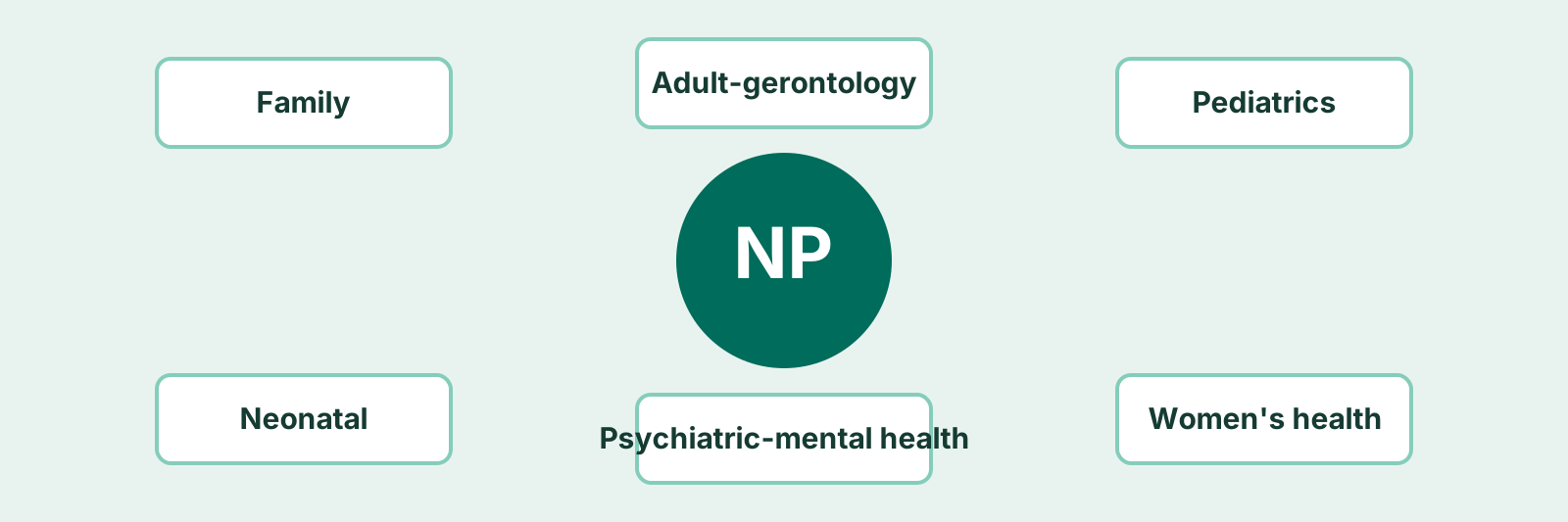
Start with the population. The APRN Consensus Model recognizes six population foci: family or individual across the lifespan, adult-gerontology, women’s health and gender-related, pediatrics, neonatal, and psychiatric and mental health. Some of those foci, adult-gerontology and pediatrics, are further split into primary and acute care. Your pathway is the combination you train and certify for.
Who This Pathway Choice Is For
This guide is for two readers. The first is an RN who is still deciding whether an NP role fits. The second is an RN who is already planning a graduate program and needs to narrow the track before applying. Both need the same first step: naming the patients you want to care for every day.
The APRN Layers You Need to Separate
Four separate ideas get mixed together in NP conversations: the APRN role, the patient population, the specialty and the degree. Keeping them apart makes program pages easier to read.
| Layer | What it means | Example |
|---|---|---|
| Role | The APRN category. The Consensus Model names four: certified nurse midwife, certified nurse practitioner, certified registered nurse anesthetist and clinical nurse specialist. | Certified nurse practitioner (CNP) |
| Population | The patients you are educated and certified to care for. | Adult-gerontology, pediatrics, psychiatric and mental health |
| Acuity or specialty | Primary or acute care within a population, where the population is split. | Adult-gerontology acute care (AGACNP) |
| Degree and certification | The graduate program and the national certification exam that goes with the pathway. | An accredited master’s program and a certification exam in your population |
Sources: APRN Consensus Model, NCSBN; ANA, Types of Nurse Practitioner Specialties.
Compare the Main Pathways
The table below lists the pathways most often offered. Program names and tracks vary, so check the specific program and its certification before you choose.
| Pathway | Patients | Typical setting, per ANA | Acuity |
|---|---|---|---|
| Family NP (FNP) | Patients of all ages, for primary care | Primary care and comprehensive, ongoing care | Primary |
| Adult-gerontology primary care NP (AG-PCNP) | Adults and older adults | Primary care across a broad range of needs | Primary |
| Adult-gerontology acute care NP (AGACNP) | Adults and older adults | ICU, emergency and acute care units | Acute |
| Pediatric primary care NP (PNP-PC) | Children and adolescents | Private practice and public health centers | Primary |
| Pediatric acute care NP (PNP-AC) | Infants, children and adolescents with acute, critical or complex needs | Pediatric ICUs, emergency departments and specialty clinics | Acute |
| Psychiatric-mental health NP (PMHNP) | Patients with mental health and substance use needs | Private psychiatric practices, schools and community mental health centers | Not stated by ANA |
| Neonatal NP (NNP) | Newborns, including premature and ill infants | Neonatal ICUs | Not stated by ANA |
| Women’s health NP (WHNP) | Women’s reproductive and gynecologic care | OB/GYN offices, fertility clinics and hospitals | Not stated by ANA |
Sources: ANA, Types of Nurse Practitioner Specialties. Setting descriptions are summaries of that page. Check each certifying body for current eligibility.
Questions to Settle Before You Compare Programs
Answer these in order. Each answer narrows the list of programs you need to read.
- Which patients do I want to see most days? Name one population, not three. If you cannot choose, note the two you are weighing.
- Do I want to work in primary care or acute care? Acute roles usually mean ICUs, emergency departments or other high-acuity units, and the ANA describes these as typical settings for acute care NPs.
- Which certification matches that population and acuity? Confirm the exam name, the certifying body and the eligibility rules on the certifier’s own site.
- Does my target state allow the scope I want? Use the AANP state practice environment map and your state board of nursing.
- Can I manage the program’s length and clinical requirements? Read the program’s own published curriculum and clinical hour requirements, not summaries.
What the Certifying Body Tells You
The certification exam describes the role in practice. For example, the American Academy of Nurse Practitioners Certification Board describes its FNP exam as a competency-based test for entry-level family nurse practitioners that covers health assessment, pathophysiology, therapeutics and evidence-informed practice. It tests clinical knowledge across the lifespan. Read the exam content for your pathway before you decide. It shows you what you will be expected to know at the end of training.
Sources: AANPCB, FNP certification exam; ANA, Types of Nurse Practitioner Specialties.
A Pathway Choice from One RN’s Experience
I am an AGACNP student. I chose acute care because it fit my ICU and emergency department experience. That was a choice about my own background, not a ranking of pathways. The primary care pathways would have fit a different career goal, and staying at the bedside as an RN also has its own value.
Check Your Plan Against the State
Scope of practice varies. The ANA notes that an NP’s license is not tied to one workplace, but the rules on prescribing, supervision and independent practice are set state by state. For each pathway you are considering, confirm three things with your state board of nursing: whether NPs in your state have full, reduced or restricted practice authority, whether the program is recognized for your state’s licensure, and which certification the state accepts for that population.
Switching Pathways Later
Switching specialties after you are certified is possible, but the ANA notes that it can require additional training and a new certification exam. A decision made early costs less time than a change made after graduation.
Key Takeaway
Sources
- APRN Consensus Model, National Council of State Boards of Nursing: APRN roles, population foci and the primary and acute distinction.
- Types of Nurse Practitioner Specialties, American Nurses Association: NP populations, settings, acuity and state scope.
- FNP Certification Exam, AANPCB: FNP exam content and format.
- Nurse Practitioner State Practice Environment, AANP: state scope of practice.
- Nurse Anesthetists, Nurse Midwives, and Nurse Practitioners, BLS Occupational Outlook Handbook: NP education and licensure.
Sources & further reading
- National Council of State Boards of Nursing (NCSBN): APRN Consensus Model
- American Nurses Association (ANA): Types of Nurse Practitioners: NP Specialties and Career Path
- AANPCB (NPCB): FNP Certification Exam (eligibility, fees and apply)
- American Association of Nurse Practitioners (AANP): Nurse Practitioner State Practice Environment
- U.S. Bureau of Labor Statistics: Nurse Anesthetists, Nurse Midwives, and Nurse Practitioners (Occupational Outlook Handbook)
Official requirements can change. Verify details with the relevant school, certifier, or nursing board before acting.